No Label, No Problem: How Bedroom Producers Are Blowing Up Without Selling Their Soul

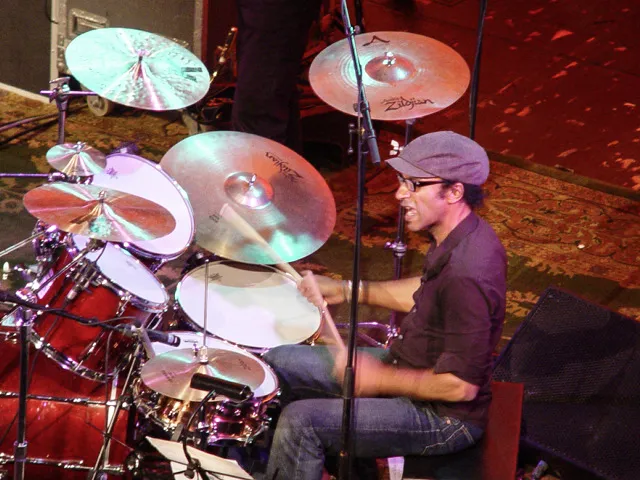
Photo: Erik A. Drabløs, CC BY 3.0, via Wikimedia Commons
The Gate Is Wide Open Now
Not that long ago, getting your music heard by more than a handful of people meant one thing: convincing someone in a suit that you were worth their time and money. Record labels controlled the distribution, the marketing dollars, the radio pluggers, and the press connections. If they didn't believe in you, your tracks collected dust on a cassette tape or a hard drive.
That era isn't just fading — it's crumbling. And the people doing the most damage to it aren't rock stars or industry insiders. They're producers sitting in front of glowing laptop screens at 2 a.m., wearing headphones, uploading tracks to Spotify and SoundCloud between shifts at their day jobs.
This is the bedroom producer revolution, and it's very much alive in America right now.
What Changed Everything
The software side of the story is almost too obvious to say out loud, but it's worth saying anyway: the tools got insanely good and insanely cheap. A copy of Ableton Live Lite comes free with a ton of hardware controllers. FL Studio's lifetime license runs a few hundred bucks. GarageBand is literally free on every Mac. Plugins that would've cost thousands in the '90s — compressors, reverbs, synthesizers — are now available as free VSTs that sound legitimately professional.
Beyond the software, platforms like Bandcamp, DistroKid, and TuneCore let a producer upload their music to every major streaming platform for next to nothing. No middleman. No waiting for a label's quarterly release schedule. You finish a track on a Tuesday night and it can be live on Apple Music by Friday.
And then there's social media, which changed the marketing equation entirely. A short clip of a producer building a beat on TikTok can reach 500,000 people overnight. YouTube tutorials double as promotional content. Instagram Reels showing studio setups build parasocial connections with listeners who feel like they know you before they've even pressed play on your first release.
Real People, Real Numbers
Let's talk specifics, because this isn't theoretical anymore. Artists like Clairo famously launched from a bedroom-recorded video that went viral before she had any real industry support. Producers like Shlohmo, Giraffage, and more recently artists operating in the lo-fi and hyperpop spaces have built dedicated fanbases entirely through digital channels. The underground electronic scene in cities like Los Angeles, Chicago, and Atlanta is full of producers pulling in five and six figures annually through a combination of streaming royalties, Bandcamp sales, sync licensing, and Patreon memberships.
The math has shifted. You don't need a million streams to make a living. You need the right thousand fans — or the right sync placement in a Netflix show, a gaming trailer, or a YouTube channel with a massive following. Niche audiences are loyal audiences, and loyal audiences spend money.
The Mindset Shift Is the Hard Part
Here's the thing nobody talks about enough: the technical and financial barriers to entry have dropped, but the psychological ones haven't. Plenty of talented producers are still waiting for permission. They're holding back releases because they don't feel "ready." They're hesitating to promote their work because it feels like bragging. They're comparing their bedroom setup to what they imagine a "real" studio looks like.
The producers who are actually breaking through have figured out that done is better than perfect, and authentic is better than polished. Listeners — especially in the indie and electronic spaces — can hear when something was made with genuine energy and intention. A track recorded in a treated closet with a solid interface can hit harder emotionally than something that cost ten times as much to produce in a commercial studio.
The mindset shift is accepting that you are the label now. That means you handle the creative work and the business side. You're the A&R, the marketing department, and the artist all at once. That's a lot, but it also means you answer to nobody but your audience.
What This Means for the Future
Major labels aren't disappearing tomorrow. They still have resources — promotional infrastructure, radio relationships, and the ability to break artists at a scale that's hard to replicate independently. But their leverage has been fundamentally weakened. They used to be the only path. Now they're one option among many, and not always the best one.
More and more artists are signing deals only after they've already built an audience — which means they negotiate from a position of strength rather than desperation. Some are skipping the deal entirely and staying independent for life. Publishing and sync deals are increasingly attractive alternatives that let creators keep their masters while still generating real income.
The infrastructure for a self-sustaining music career has never been more accessible in America. You don't need a co-sign from a major. You need a laptop, a decent audio interface, a willingness to put in the reps, and the guts to hit upload.
The bedroom isn't just where you make music anymore. It's where careers are built.
Start Where You Are
If you're a producer sitting on tracks you haven't released yet, this is your sign to stop waiting. The revolution doesn't care about your gear list or your follower count. It cares about the music and the consistency. Pick a platform, build a workflow, and start putting your sound out into the world.
The labels spent decades telling artists they needed them. Turns out, that was always just a story they told to stay in control. The bedroom producers figured that out — and they're not looking back.