Press Play, Then What? The AI Co-Producers Changing the Rules of the Studio

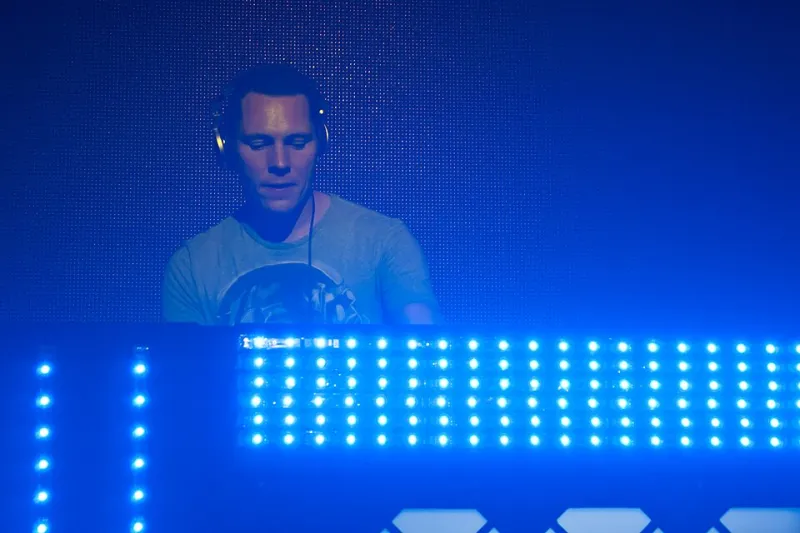
Photo: Autoclavebeats, CC BY-SA 4.0, via Wikimedia Commons
Something weird is happening inside studios across the country. Producers are pulling up their DAWs, loading a project, and then — before they even touch a synth or reach for a sample pack — asking a machine what to play next. AI tools have quietly moved from novelty to daily workflow staple, and the music coming out the other side is raising some genuinely uncomfortable questions about who actually made it.
This isn't some far-off future thing. It's Tuesday afternoon in a bedroom studio in Atlanta, a loft in Brooklyn, a converted garage in Portland. Producers are using tools like AIVA, Soundraw, Boomy, and built-in AI features inside platforms like BandLab and even FL Studio to generate chord progressions, suggest drum patterns, spit out bassline ideas, and in some cases, build out nearly complete instrumental sketches. The question isn't whether this is happening. It's whether anyone knows what it means yet.
The Case for Letting the Machine In
Talk to producers who've leaned into AI and you'll hear a lot of the same word: friction. Specifically, the removal of it.
"I used to spend two, three hours just trying to get a chord progression that didn't feel like something I'd already done," says Marcus Webb, an electronic producer based in Chicago who's been releasing music independently for about six years. "Now I'll throw a prompt into one of these tools, get five options in thirty seconds, and usually one of them sparks something I never would've gone near on my own. I'm not using what it gives me — I'm using what it makes me think of."
That distinction matters to a lot of producers in this camp. They're not copying AI output wholesale. They're using it the way a session musician might use a random arpeggiator or a broken drum machine — as a source of happy accidents. The AI becomes a weird collaborator, one with no ego and no agenda, that occasionally throws out something genuinely surprising.
For producers working in high-volume environments — sync licensing, content creation, lo-fi playlist output — the efficiency argument is even harder to dismiss. When you're trying to produce a track a day, AI assistance isn't a creative crutch, it's a production line upgrade. Some are using it to rough out structures fast and then spend their real creative energy on sound design, mixing, and the emotional texture that makes a track feel human.
The Purists Aren't Having It
Not everyone's on board. And their concerns go deeper than simple technophobia.
Denise Morales has been producing indie electronic music out of Austin for nearly a decade, releasing through small labels and keeping a loyal following through relentless touring and raw, unpolished releases. She hasn't touched an AI composition tool and says she has no intention of starting.
"The whole point of what I do is that it comes from somewhere real," she says. "When I'm stuck, that's information. That stuck feeling is where the interesting stuff comes from. If I just hand that off to an algorithm, I'm skipping the part that makes the music mine."
Her concern isn't just philosophical. She points to a practical problem: if AI tools are trained on existing music — which they are — then everything they generate is essentially a statistical remix of what's already been made. The output might feel fresh, but it's built from patterns extracted from someone else's originality. That raises thorny questions about what "original" even means anymore, and whether producers using these tools are inadvertently laundering other artists' creative DNA into their own work.
The copyright question is real and still largely unsettled. Several high-profile lawsuits are working their way through courts right now around AI-generated content and the training data used to build these models. For producers releasing music commercially, the legal gray zone is genuinely murky.
The Uncomfortable Middle Ground
Here's the thing though: the line between inspiration and derivation has always been blurry. Producers have been chopping samples, borrowing drum breaks, and lifting chord progressions from jazz standards for decades. The blues was built on shared vocabulary. Hip-hop was born from creative theft, legally speaking. The idea that there was ever some pure, untainted well of originality that AI is now contaminating is a little romantic.
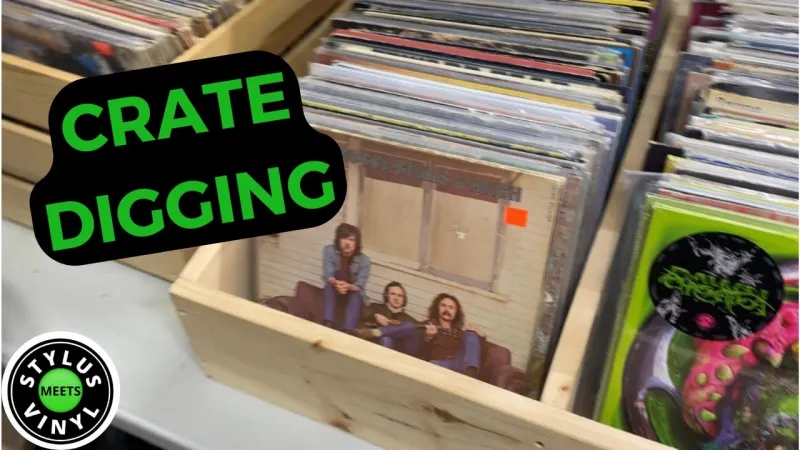
What AI does is make the process faster, more explicit, and harder to romanticize. When you flip a record and chop a two-bar break, there's a human story attached — the crate dig, the discovery, the transformation. When you click "generate" in a browser tab, the story is... you clicked a button. That's not nothing, but it's different.
Some producers are finding ways to make it mean something anyway. Jordan Ellison, a producer and multi-instrumentalist working out of Nashville, uses AI melody generators specifically to create ideas he then fights against. "I'll generate something, and my first instinct is usually 'that's not it.' But then I ask myself why, and that answer leads me somewhere. It's like having an argument with a collaborator who has no taste — you figure out what you actually believe by pushing back."
What It's Doing to the Sound of Independent Music
Zoom out and there's a bigger picture forming. If thousands of independent producers are pulling from the same handful of AI tools, all trained on similar datasets, is independent music about to get more homogeneous, not less? The whole appeal of the indie and electronic underground has always been that it sounds like someone — weird, specific, sometimes lo-fi in ways that feel intentional and human.
There's a real risk that AI-assisted production, scaled up, smooths out exactly the rough edges that make underground music worth listening to. The glitches, the slightly-off timing, the choices that don't quite make sense but somehow work — those are the things that make a track feel alive. Algorithms optimizing for pleasantness are not optimizing for that.
But the counter-argument holds too. Tools don't make art. People do. A bad producer with an AI assistant is still going to make music that sounds like a bad producer. A great one is going to find ways to use every tool available to push further than they could alone.
So Who Made the Song?
That's the question nobody has a clean answer to yet. If you use an AI to generate a chord progression, reharmonize it, build a beat around it, add your own synths and vocals and mix it into something that moves people — is that your song? Legally, probably yes for now. Creatively? That's between you and whoever's listening.
What's clear is that the conversation isn't going away. AI tools are getting more capable, more integrated into the software producers already use, and more accessible to people who've never touched a DAW in their lives. The music industry is going to have to figure out attribution, compensation, and creative credit in ways it's never had to before.
In the meantime, producers are doing what they've always done: making it work with whatever's in front of them, asking questions later, and hoping the music says something true regardless of how it got made. Whether the ghost in your DAW is a creative partner or a creative shortcut probably depends less on the tool and more on what you're actually trying to say.