Crate Digging to Chart Climbing: The Producers Flipping Thrift Store Vinyl Into Modern Bangers
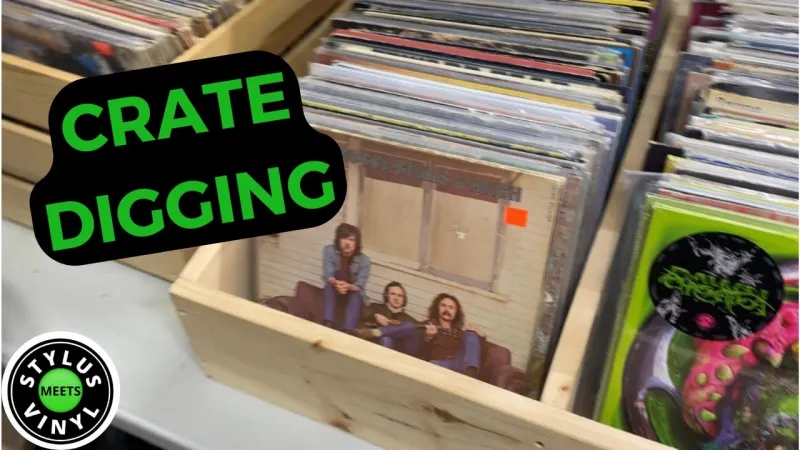
Photo: vinyl record crate digging thrift store music producer, via i.ytimg.com
It starts with a smell. That particular mix of mildew, cardboard, and decades-old paper that hits you the second you walk into a church basement sale or a Goodwill on the outskirts of some mid-size American city. Most people walk right past the record bins. The producers who are quietly reshaping electronic music? They stop. They flip. They listen — sometimes just by reading the label, the pressing info, the faint pencil marks a previous owner left on the sleeve.
Crate digging isn't new. Hip-hop built entire decades on it. But right now, in 2024, there's a growing wave of indie and electronic producers who've taken that tradition and pushed it somewhere weirder, more experimental, and honestly more exciting than it's been in a long time.
The Hunt Is Half the Point
Ask any serious digger and they'll tell you — the process of finding a sample is inseparable from the final track. It's detective work with no clear case file.
Take producers who specialize in what some call "library music" flips — those odd instrumental records made in the '60s and '70s specifically for TV and film background scores. These records were pressed in tiny quantities, distributed to production houses, and then largely forgotten. They never got radio play. Nobody collected them the way they collected soul or jazz. That means they've been sitting in estate sale boxes for decades, going for a dollar or two, completely ignored.
Until now.
Producers hunting this stuff describe a kind of sixth sense that develops over time — a gut feeling when a sleeve looks "right." Foreign pressings. Obscure labels. Strange instrumentation credits. Anything that signals the record might have something unexpected inside: a weird chord voicing, a drum break that doesn't sound like anything else, a two-second flute run that, pitched down and chopped, becomes the hook of something completely original.
Chop It, Pitch It, Make It Yours
The actual production side of this is where things get genuinely creative. Finding a sample is step one. Transforming it so completely that it becomes a new thing entirely — that's the art.
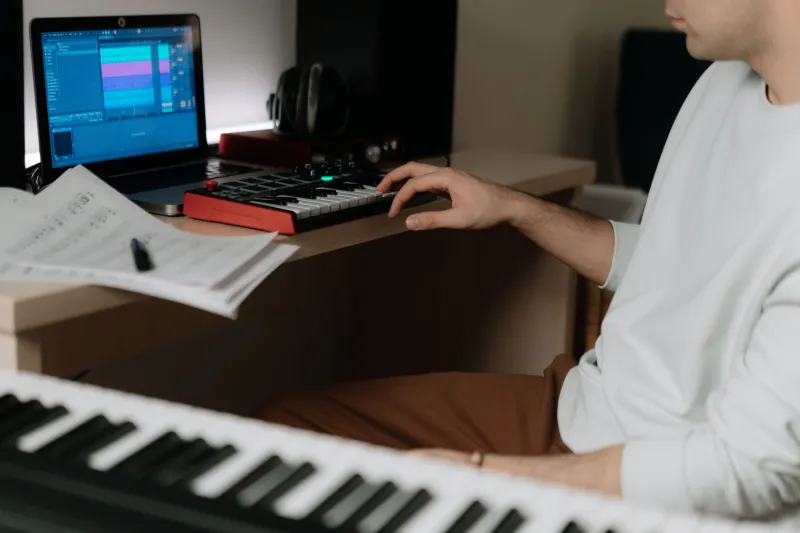
The standard toolkit involves time-stretching, pitch-shifting, layering, and chopping samples into fragments so small the original source becomes unrecognizable. A string section from a 1973 Italian film score gets stretched until it sounds like a drone. A single piano note from a gospel record gets looped and filtered into a hypnotic pad. A two-bar drum groove from an obscure Brazilian funk record gets sliced up, rearranged, and run through distortion until it hits like something off a contemporary club record.
What's interesting about the current crop of producers doing this is how far they're pushing the transformation. It's not about nostalgia. Nobody's trying to make music that sounds like 1972. The vintage source material is raw clay — something to manipulate, distort, and rebuild into sounds that couldn't have existed without modern production tools.
Some producers are pairing ancient vinyl sources with completely contemporary sound design: 808 sub-bass, digital synthesis, hyper-compressed percussion. The contrast between warm, organic sample textures and cold, precise electronic elements has become a signature aesthetic in its own right.
The Legal Gray Zone Nobody Wants to Talk About
Here's where things get complicated. Sampling without clearance is, technically, copyright infringement. That's been true since the landmark 1991 case involving Biz Markie, which sent shockwaves through hip-hop and forced an entire generation of producers to either clear their samples or bury them deep enough that nobody could trace them.
For independent producers releasing music on Bandcamp, SoundCloud, or small indie labels, the practical reality is messier. Most obscure library records exist in murky legal territory — sometimes the original rights holders are impossible to track down, sometimes the publishing has changed hands multiple times, sometimes the original composers signed away everything for a flat fee and have no claim at all.
Some producers approach it pragmatically: keep releases small and independent, avoid major platform placement for anything that might draw attention, and if something blows up, deal with the clearance conversation at that point. Others invest serious time in actually researching who owns what before a track goes public — a process that can take weeks and sometimes leads nowhere.
There's also a growing community of producers who specifically seek out records that are definitively in the public domain — recordings old enough that copyright has expired — or who use samples purely as inspiration, recreating the feel of a discovered sound with original recordings rather than using the source directly.
None of this has a clean answer. It's a tension that's lived inside sample-based music since the beginning, and it's not going away.
What the Vinyl Actually Gives You
Beyond the legal and logistical complications, producers keep coming back to this process for one simple reason: the sounds are genuinely different.
Vinyl introduces imperfections that digital recording doesn't have — surface noise, slight pitch variations from worn-out pressing equipment, the natural compression of the cutting and pressing process. These aren't flaws to be corrected. They're texture. They're warmth. They're the sonic equivalent of grain in film photography, and they give sample-based tracks a quality that purely digital productions often struggle to replicate.
There's also something about the randomness of the discovery process that forces creative decisions you'd never make otherwise. You're not scrolling through a sample pack designed to fit a specific genre. You're working with whatever you found in a bin in rural Ohio, and that constraint breeds unexpected results. Some of the most interesting production choices come from producers asking "what do I do with this?" rather than reaching for something familiar.
Building a Sound No Algorithm Can Copy
In an era where AI can generate passable music in seconds and sample packs have homogenized a lot of independent production, the crate diggers are sitting on something genuinely irreplaceable: source material that exists nowhere else.
A record pressed in 500 copies in 1968 and distributed only to regional television stations in the Midwest is, effectively, a unique sonic resource. Nobody else has it. No AI was trained on it. No sample pack includes it. The producer who finds it, recognizes its potential, and knows how to transform it has something that can't be replicated by someone with a faster laptop or a bigger plugin library.
That's the real appeal, underneath all the romanticism of dusty bins and road trips to estate sales. It's not nostalgia. It's competitive advantage built on patience, taste, and a willingness to do the physical work of actually showing up.
The underground is alive. And it smells like old cardboard.