Perfectly Off-Beat: How Locking Into the Grid Is Slowly Draining the Life From Your Tracks

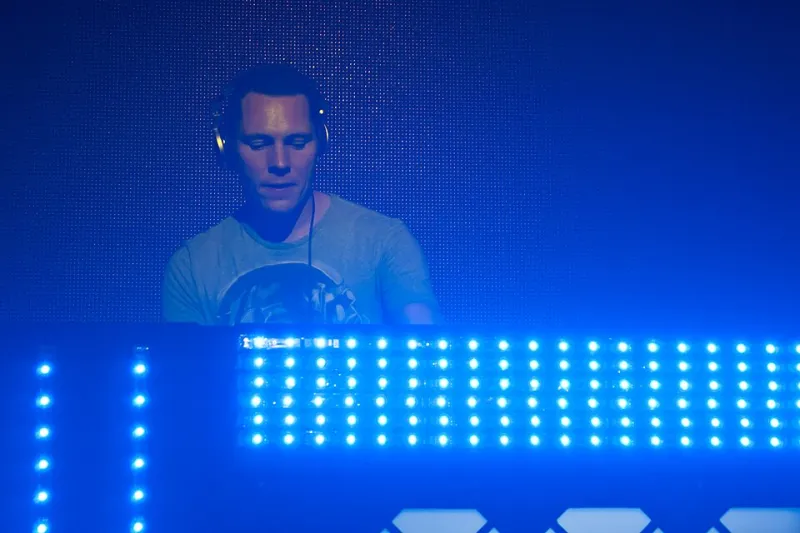
Photo: Pierre-Yves Beaudouin, CC BY-SA 3.0, via Wikimedia Commons
You've done everything right. The kick lands exactly on the one. The snare is surgically placed at the two and the four. Every hi-hat is spaced with the kind of mechanical precision that would make a Swiss watchmaker weep with joy. And yet — something's missing. The track breathes like a spreadsheet. It moves like a robot that just learned what dancing is.
Welcome to the grid trap. It's one of the most common places indie and electronic producers get stuck, and the frustrating part is that it feels like discipline when it's actually a cage.
The BPM Religion and How It Took Over Your Studio
There's nothing wrong with knowing your tempo. Setting 120 BPM and building from there is a totally reasonable starting point. The problem creeps in when that number stops being a reference and starts being a law. Somewhere along the way — probably around the time DAWs started defaulting to 100% quantization — producers collectively decided that being exactly on the grid was the same as being good.
It's not.
The music that hits you in the chest — the stuff that makes you nod without realizing it — almost never lives precisely on the grid. J Dilla built an entire legacy on drums that seemed to stumble forward in the most hypnotic way possible. Four Tet has spent decades layering elements that drift just enough to feel alive. Even in harder electronic genres, the producers who stand out are usually the ones playing subtle games with time that your conscious brain never quite catches.
The grid is a tool. You're treating it like a religion.
What "Pocket" Actually Means (And Why It's Not About Precision)
Producers throw the word "pocket" around constantly, but it's worth slowing down and actually unpacking it. The pocket isn't a place on the grid. It's a relationship — between elements, between the beat and the bass, between the rhythm and the listener's expectation. It's the feeling that everything is landing exactly where it needs to land, even when a closer look reveals that nothing is technically perfect.
Human drummers have known this forever. A live drummer playing with a bassist creates micro-timing conversations that no DAW quantization setting can replicate. The drummer might push slightly ahead of the beat on a fill and settle back into a laid-back groove right after. That push and pull is what makes you feel the music rather than just hear it.
When you quantize everything to 100%, you eliminate that conversation entirely. Every element snaps to the same point in time, and the result is music that's correct but lifeless. It's the audio equivalent of autocorrect — technically right, but somehow wrong.
Practical Ways to Put the Humanity Back
Okay, so you want to loosen up. Here's where to start without completely blowing up your workflow.
Drop your quantization strength. Most DAWs let you quantize to a percentage rather than a hard snap. Try 70% or 80% instead of 100%. Your elements will pull toward the grid without being chained to it. This single change can add a surprising amount of warmth to a drum pattern that felt robotic before.
Introduce swing deliberately. Swing isn't just a jazz thing. Adding even a small swing percentage to your hi-hats or percussion elements can shift a flat groove into something that breathes. Start subtle — 52% to 55% swing — and listen for the moment the pattern starts to feel like it's moving instead of just ticking.
Nudge individual hits manually. This is more time-consuming, but it's worth it. After you've laid down a drum pattern, go in and manually push or pull specific hits by a few milliseconds. A snare that sits 8-10ms behind the beat suddenly sounds lazy in the best possible way. A hi-hat that pushes 5ms ahead sounds urgent. These are tiny numbers, but the ear picks them up even when the brain doesn't.
Layer a live element against the programmed grid. Even one live-recorded element — a shaker, a hand clap, a single guitar strum — introduces natural timing variation that affects how the whole track feels. The programmed elements start to sound more organic just by association.
Try recording MIDI without a click track. Terrifying, right? Try it anyway. Record a simple bass line or chord progression without the metronome running and see what comes out. You might hate it. You might find something that feels more like music than anything you've built in months.
The Producers Already Living in the Space Between the Beats
If you need permission to let go of the grid, look at what's actually working out there. Kaytranada's production has always had a rubbery, elastic quality that comes directly from how he treats timing — elements that seem to breathe around the beat rather than sit on top of it. His tracks feel like they're being played, not programmed.
On the more experimental end, producers like Arca and Actress have built entire sonic identities around fractured, unstable rhythms that seem to resist the grid entirely. That's not an accident. That's a choice — a deliberate rejection of the idea that precision equals quality.
Even in club-focused production, where you'd expect the grid to be sacred, producers like Floating Points have demonstrated that a track can be simultaneously tight enough to hold a dancefloor and loose enough to feel like it's alive.
The common thread isn't chaos. It's intentionality. These producers know exactly where the grid is. They just choose when to honor it and when to ignore it.
Letting Go Without Falling Apart
Here's the thing nobody tells you when they hand you your first DAW tutorial: the grid exists to serve the music, not the other way around. Your job isn't to make something that looks clean in the arrangement view. Your job is to make something that hits.
Start small. Pick one element in your next track — just one — and deliberately move it away from the grid. Listen to what happens. Notice whether the track feels different. Chances are it does, and chances are it feels better.
The metronome is a starting point, not a finish line. The producers making the most memorable music right now understand that. The ones still chasing perfect quantization are making tracks that sound impressive for about thirty seconds and then disappear from memory entirely.
Raw energy doesn't live on the grid. It lives in the spaces around it. Go find yours.