Solo and Stuck: How Making Music in a Vacuum Is Slowly Suffocating Your Sound
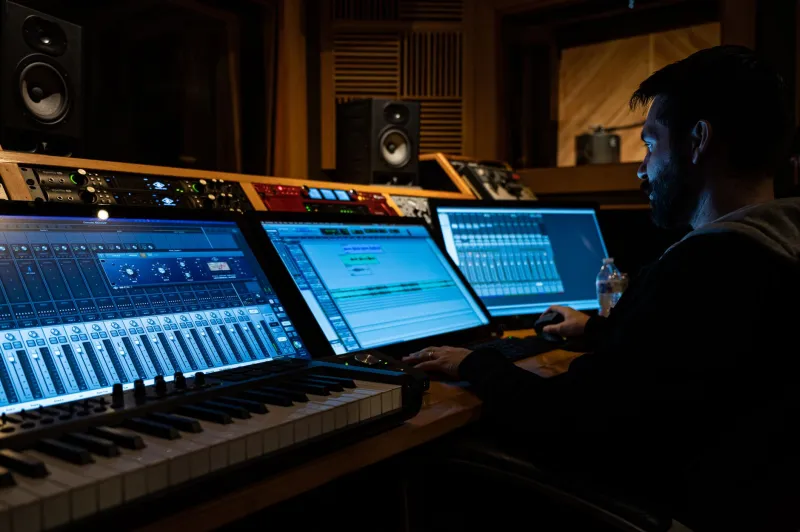
There's a version of the bedroom producer story that sounds like freedom. No label breathing down your neck, no session clock ticking, no one telling you the snare needs to hit harder. Just you, your monitors, and the infinite possibility of a blank session. It's a beautiful picture — and for a lot of indie and electronic producers, it's also a slow-moving creative disaster.
Making music alone isn't inherently bad. Some of the most singular, genre-defining records came out of one person locked in a room with their ideas. But there's a difference between solitude as a tool and isolation as a default. When the bedroom studio becomes the only place you ever make decisions, something starts to calcify. The choices get smaller. The risks feel bigger. And before long, you're spending four hours A/B-ing two nearly identical kick sounds and calling it a productive session.
The Echo Chamber Nobody Warned You About
Here's the thing about working alone: your brain is genuinely terrible at evaluating its own output in real time. Cognitive science has a term for this — evaluative saturation — where repeated exposure to the same stimulus makes it nearly impossible to assess it objectively. You've heard that loop so many times it stopped meaning anything twenty listens ago. But because there's no one else in the room, you keep going. You keep tweaking. You keep second-guessing.
Producers who've clocked serious solo hours know this feeling intimately. Chicago-based electronic producer Marcus Delray described it bluntly in a recent online forum post that circulated in production communities: "I finished a track, thought it was garbage, scrapped it, rebuilt it, thought it was fire, finished it again, and then couldn't tell the difference between the two versions. I'd been in the room for twelve hours and made literally zero progress."
That's not a workflow problem. That's an isolation problem.
When you have another person in the room — even someone who isn't a producer — the feedback loop changes entirely. A reaction, a head nod, a confused look, a question like "wait, what's that weird sound at 2:15?" — all of that is data your brain can actually use. Real-time human response cuts through the fog in a way that solo listening just can't replicate.
Burnout Doesn't Always Look Like Burnout
Creative burnout in the bedroom studio context rarely shows up as dramatic creative paralysis. More often, it looks like productivity without progress. You're making stuff every day. Sessions are happening. But nothing is getting finished, nothing is getting shared, and nothing is exciting you anymore. You're going through the motions in a room by yourself, and the room is starting to feel like it's getting smaller.
Psychologists who study creative professionals point to the absence of social reinforcement as a major driver of this kind of stagnation. Humans are wired for creative collaboration — we evolved making things together, responding to each other, building on shared ideas. The bedroom studio model, as liberating as it is logistically, actively works against that wiring. And the longer you go without real creative exchange, the harder it becomes to trust your own instincts.
What Breaking the Cycle Actually Looks Like
The good news is you don't have to dismantle your setup or start booking studio time you can't afford. The fix is usually smaller and more accessible than producers expect.
Peer listening sessions, even remote ones, are wildly underrated. Platforms like Discord have become genuine community hubs for producers to share works-in-progress and get unfiltered feedback. The key is finding a group that's honest — not one that's just there to hype each other up. Actual critique, even when it's uncomfortable, is the whole point. A few producers who've integrated weekly feedback calls into their workflow report that the accountability alone was enough to break months-long creative ruts.
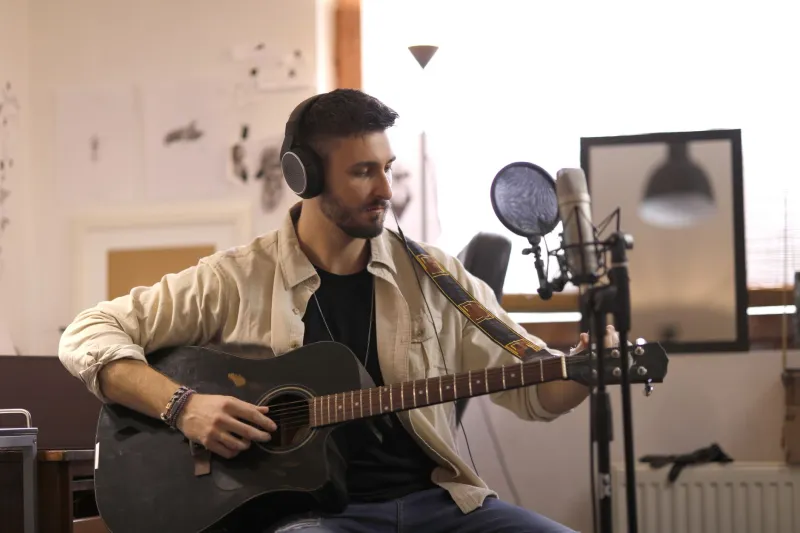
Casual jam sessions don't require a full band or even the same genre. Some of the most creatively productive sessions happen when a producer links up with a guitarist, a vocalist, or even just a friend who plays around with synths for fun. The point isn't to make a finished track — it's to make decisions in real time with another person, which exercises a creative muscle that pure solo work lets atrophy. You make faster choices. You commit to sounds. You stop overthinking.
Co-working for producers is a real thing now. Several cities have started hosting open studio sessions where producers bring their laptops and work in the same physical space, even if they're each on their own projects. The ambient presence of other people working creatively has a measurable effect on focus and output. If you're in a smaller market, even a coffee shop with headphones can shift the energy.
Asynchronous collaboration tools have matured significantly. Apps like Splice, Audiomovers, and even simple shared cloud folders make it possible to trade stems and ideas with collaborators across time zones without ever needing to sync up schedules. A producer in Atlanta can drop a rough arrangement, a producer in Portland can add a layer, and by the end of the week you've got something neither person would have made alone.
The Permission You Didn't Know You Needed
There's a certain mythology around the lone genius producer — the image of one person conjuring something fully formed out of thin air, no input required. It's compelling, and it's mostly fiction. Even the producers who seem to work entirely alone are usually embedded in communities, taking in shows, having conversations, absorbing feedback in ways that are less formal but just as real.
Your bedroom studio is an asset. The isolation that often comes with it is not. The trick is learning to protect the former while actively dismantling the latter. That might mean scheduling a weekly call with another producer just to play each other rough ideas. It might mean showing up to a local open mic not to perform, but just to be in a room where music is happening around other humans.
The point is to get your music in front of ears that aren't yours — regularly, without waiting until something is "finished enough." Because if you're waiting for finished, and you're the only one in the room, finished might never come.
Get out of the vacuum. Your tracks will thank you.