Wreckage as Raw Material: How Falling Apart Made These Producers Sound Like Geniuses

There's a version of the studio experience nobody puts on Instagram. No aesthetic flat-lay of vintage gear. No golden-hour photo of headphones draped over a monitor. Just a producer — red-eyed, three days unwashed, running on cold brew and spite — dragging audio clips around a session at 2 a.m. because there is genuinely nowhere else to be.
That version of the studio? That's where some of the most honest, gut-punch music gets made.
This isn't a romantic pitch for self-destruction. It's an observation that keeps showing up across indie and electronic music scenes, from Chicago basements to Brooklyn walk-ups to a million unnamed home setups scattered across the US: the tracks that hit the hardest often come from the moments when everything else was falling apart.
Pain Has a Frequency
Here's something producers don't talk about enough — emotional states physically change how you work. When you're in the middle of a breakup, a falling-out with a collaborator, or just a stretch of life that's grinding you down, your decision-making shifts. You stop second-guessing. You stop worrying about whether the hi-hat is cool or whether the drop is trending. You just make the thing that feels true right now.
That urgency has a sound. Anyone who's ever listened to a record and thought, this person was going through it — you weren't imagining it. You were hearing the absence of overthinking.
Electronic music, maybe more than any other genre, has this weird capacity to absorb emotional texture without announcing it. A slightly detuned synth pad. A vocal chop that's been stretched just past the point of comfort. A drum pattern that keeps almost resolving but never quite does. These aren't just production choices — they're emotional states translated into signal.
The Bedroom Studio as Pressure Valve
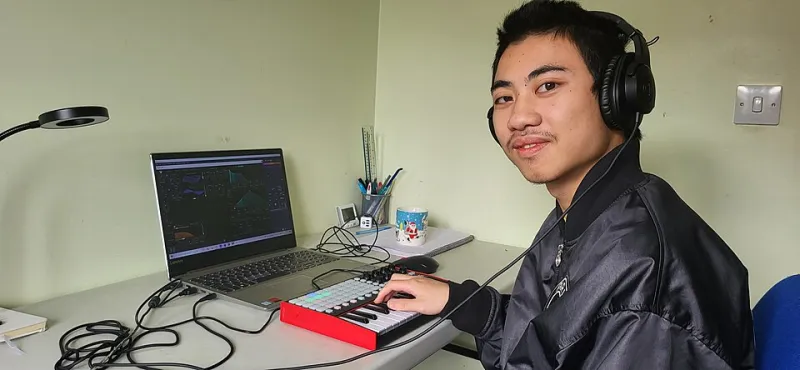
For a lot of indie producers, the home studio isn't just a workspace. It's the place you go when the rest of life has stopped making sense. And that relationship — the studio as refuge — does something interesting to the work that comes out of it.
When you're making music because you have to, because you've got nowhere else to put what you're feeling, the stakes change completely. You're not chasing streams. You're not thinking about playlist placement. You're just trying to get something out of your chest and into the speakers. That pressure, paradoxically, often produces the most focused, least bloated work a producer ever makes.
Track counts drop. The arrangements get leaner. The emotion sits closer to the surface because there's no energy left to bury it under layers of clever production moves.
The Danger Nobody Warns You About
Here's where we have to pump the brakes a little, because this conversation has a shadow side.
Using emotional pain as fuel is real and valid. Using it as an excuse to blow up your professional relationships, ghost collaborators, or disappear from a release cycle you committed to — that's a different thing entirely. The romantic mythology around the suffering artist has burned a lot of careers that didn't need to burn.
The producers who actually manage to turn their worst periods into their best work have one thing in common: they stay functional enough to finish. They might be wrecked on the inside, but they still bounce stems, still respond to the mix engineer eventually, still get the master uploaded before the deadline.
Feeling everything is the asset. Letting it eat your professionalism is the liability. That line matters.
Practical Ways to Work Through It (Without Working Against Yourself)
So what does it actually look like to channel emotional chaos productively? A few things that come up again and again when you talk to producers who've been through it:
Record everything, curate later. When you're emotionally raw, your filter drops. That's useful. But it also means not every idea that comes out of a 3 a.m. session is a keeper. Hit record constantly during those periods, but give yourself permission to sort through it with fresh ears a week later. The gems will still be gems. The garbage will reveal itself.
Lean into the dissonance. If something sounds slightly wrong but feels right, trust the feeling. Emotional states produce harmonic choices that technically trained ears might flag as mistakes. Some of those mistakes are actually the most interesting parts of the track.
Set a container for the session. Two hours, hard stop. This sounds counterintuitive — if the emotion is flowing, why cut it off? Because exhausted, emotionally depleted producers make bad structural decisions. The vibe might be perfect. The arrangement choices at hour four might not be.
Don't send anything out immediately. The impulse to share a track the moment it feels cathartic is strong. Resist it. What feels like a revelation at midnight sometimes feels like oversharing by morning. Let it breathe for 48 hours before it goes anywhere.
What You're Actually Making
There's a reason listeners connect so deeply with music that was made under emotional duress. It's not because suffering is inherently noble or that pain makes better artists. It's simpler than that: people can tell when someone means it.
In a landscape absolutely saturated with technically polished, emotionally inert music — tracks that were assembled competently but never actually felt anything — the stuff that comes from a real place cuts through. It doesn't matter if it's an ambient electronic record or a glitchy beat tape or a synth-pop EP about a relationship that dissolved in slow motion. If it was made with genuine emotional stakes, listeners feel that. They might not be able to articulate why. They just know the difference.
Your worst times might also be your most honest times in the studio. That's not a silver lining. That's just a fact about how creative work functions.
The Comeback Track Is Part of the Story
One more thing worth saying: the music you make on the other side of a hard period has its own power. The track that documents the beginning of feeling okay again, the beat that's a little lighter than the ones before it — that's part of the narrative too. Listeners who followed you through the dark material will feel the shift. That arc, from wreckage to something resembling solid ground, is one of the most compelling stories music can tell.
So keep making the music that comes from the hard places. Just don't forget to also make the music that comes after.