Walk Away From the DAW: The Science of Why Your Worst Studio Slumps End Outside the Studio

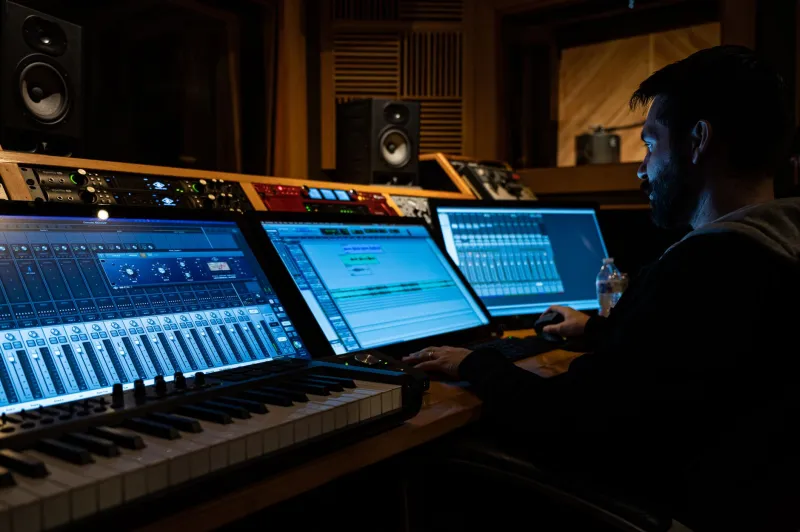
At some point in the life of every serious producer, there's a session that just won't move. You've been staring at the arrangement for hours. You've tried every variation. You've bounced it down, listened back, reopened the session, moved one element slightly to the left, and convinced yourself it's worse. The track is stuck. You are stuck. And the more time you spend trying to force a solution, the further away the solution gets.
The instinct is to push harder. Stay longer. Try another approach. Hustle culture has been particularly effective at convincing creative people that output is always a function of effort — that if you're not making progress, the answer is more time, more discipline, more grind. It's a seductive framework. It's also frequently wrong.
The actual answer, backed by decades of cognitive science research and confirmed by a growing number of working producers, is often the same: shut the laptop, leave the room, and go do something that has absolutely nothing to do with music.
What Your Brain Is Doing When You're Not at the DAW
The science here is genuinely fascinating and not nearly as intuitive as it sounds. When you step away from a creative problem, your brain doesn't stop working on it. It shifts processing from the prefrontal cortex — the part responsible for focused, analytical thinking — to the default mode network, a system of brain regions that activates during rest, daydreaming, and unfocused thought.
The default mode network is where associative thinking happens. It's where your brain makes unexpected connections between things that your focused, task-oriented mind would never link together. It's the neural substrate of the "shower idea" — the breakthrough that arrives not when you're trying, but when you've stopped.
Researchers studying creative cognition at institutions including UC Santa Barbara and the University of Illinois have documented this consistently: people who take breaks during complex creative tasks don't just feel better, they actually perform better. They generate more original solutions. They make more unexpected connections. They come back with ideas that focused effort alone wouldn't have produced.
For electronic music producers, this maps directly onto the experience of returning to a stuck session after a day away and immediately hearing the solution. The arrangement problem that felt impossible the night before resolves itself in twenty minutes the next morning. That's not magic. That's your default mode network doing what it's built to do.
The 72-Hour Window (And Why It Works)
Among producers who've deliberately built rest into their creative process, a rough pattern keeps emerging: the most significant breakthroughs tend to come between one and three days after stepping away from a problem. Not twenty minutes. Not a single night's sleep. Somewhere in that two-to-three day window is where the big unlocks seem to happen.
This aligns with what sleep researchers call memory consolidation — the process by which the brain integrates new information and experiences during sleep, making connections that weren't available in the immediate wake state. Multiple sleep cycles compound this effect. The longer you've been away, the more integration has happened, and the fresher your perception of the work becomes when you return.
Producers who've experimented with intentional time away from the studio describe the experience in strikingly similar terms. The track you were convinced was a disaster sounds different — sometimes genuinely better than you remembered, sometimes clearly broken in ways you couldn't see before, but always clearer. The fog of proximity lifts. You hear it more like a listener would, which is ultimately the perspective that matters.
What to Do With the Time (That Isn't Scrolling)
The effectiveness of a creative break is heavily dependent on what you do with it. Stepping away from the DAW and immediately spending three hours on your phone consuming music content is not a break — it's just a different kind of overstimulation. The goal is genuine cognitive disengagement from the problem, and that requires some deliberate effort.
Physical movement is the single most consistently effective intervention. Exercise — particularly sustained aerobic activity like running, cycling, or even long walks — has been shown repeatedly to increase creative output in the hours that follow. It's not just about clearing your head. Physical activity measurably increases cerebral blood flow, boosts dopamine and norepinephrine levels, and has been linked directly to enhanced divergent thinking. Producers who run, hike, or even just take daily walks consistently report that their best ideas arrive during or immediately after movement.
Engaging with unrelated creative work can cross-pollinate in unexpected ways. Drawing, cooking, writing, woodworking, photography — any creative practice that uses different cognitive and physical muscles than music production gives your brain a different kind of stimulation while keeping the default mode network gently active. Several producers have described the experience of working on a visual art project during a music break and returning to find that the visual problem they'd been solving had somehow cracked open the musical one.
Deliberate consumption of non-music media matters more than most producers realize. Films, novels, podcasts about things completely outside the music world — these inputs feed the associative network with raw material that shows up in unexpected places. The producer who spent a week away from the studio watching nature documentaries and came back with a completely different approach to texture and space isn't an anomaly. That's the default mode network at work.
Genuine social time — not networking, not industry socializing, but actual hanging out — recharges something that isolation depletes. Laughing with friends, going to a show with no professional agenda, eating a long meal with people you like: these experiences restore a kind of emotional bandwidth that sustained solo creative work burns through faster than most producers acknowledge.
Rethinking the Hustle Narrative
The music production community has a complicated relationship with rest. The hours-in-the-studio flex is real. The "I'll sleep when I'm dead" energy is pervasive, particularly in electronic and hip-hop production circles. And while there's genuine value in discipline and consistency, the version of hustle that treats every hour away from the DAW as a wasted opportunity is actively counterproductive.
Some of the most prolific producers working today are vocal about the role of deliberate rest in their creative process. They schedule time away from the studio the same way they schedule sessions. They protect their breaks with the same seriousness they bring to deadlines. They've stopped treating downtime as a guilty pleasure and started treating it as a core part of the production workflow — because that's what it is.
If your sessions have been grinding to a halt lately, if nothing feels fresh, if you've been staring at the same arrangement for days without movement — the answer probably isn't another hour in the chair. It's a walk, a meal, a night off, maybe two. Let the default mode network do its thing.
The session will be there when you get back. And you'll be ready for it in a way that no amount of forced effort could have produced.
Step away. Come back different.