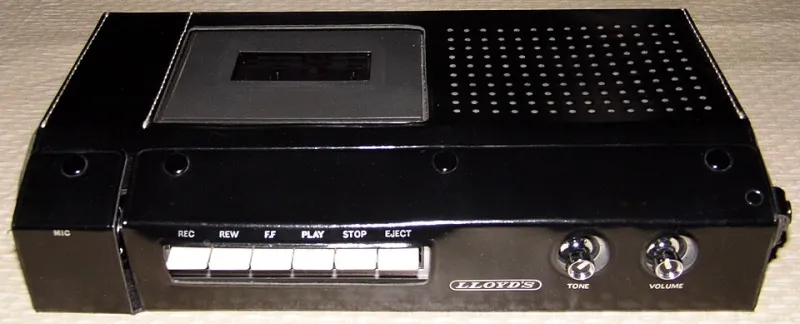
Cheap Gear, Expensive Sound: How Bedroom Producers Are Winning the Studio Arms Race Without Spending Big
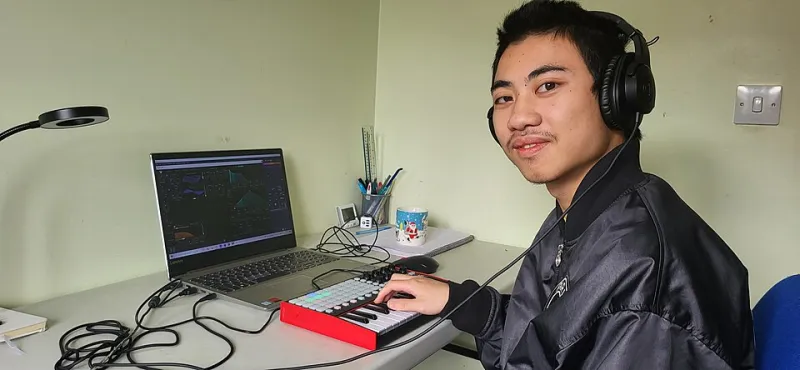
Photo: HowardXiong2026, CC BY 4.0, via Wikimedia Commons
There's a story that gets told a lot in music production circles — the one where a kid records a track on a busted laptop with a $60 USB mic and somehow ends up with a sound that makes A&R reps lose their minds. You've heard it. Maybe you've even lived a version of it. But here's what doesn't get talked about enough: that story isn't a fluke. It's becoming the norm.
The gap between professional studio recordings and bedroom productions has been shrinking for years. Right now, in 2024, it's basically a crack in the sidewalk. And the reason isn't that gear suddenly got cheaper — though it did. The reason is that producers got smarter about what actually shapes a recording.
Spoiler: it's rarely the microphone.
The Myth of the Expensive Mic
Ask any seasoned audio engineer what the biggest misconception beginners bring into a session, and most of them will say some version of the same thing — everyone thinks the microphone is doing the heavy lifting. It's not.
A $200 condenser mic placed correctly in a treated space will beat a $2,000 mic shoved in the corner of a live room almost every time. The physics here aren't complicated. Sound bouncing off untreated walls, ceilings, and floors is going to smear your recording before it ever hits the preamp. No amount of post-processing completely fixes that.
Producers who are getting professional results on budget setups have internalized this. They're spending less time researching mic upgrades and more time thinking about where they're actually recording — and what they can do about it.
Room Treatment Without the Build-Out
Here's where it gets practical. Full acoustic treatment — bass traps, broadband absorbers, diffusers — can run several thousand dollars if you go the professional route. Most bedroom producers aren't doing that. What they are doing is getting creative.
Heavy curtains on windows. Bookshelves packed with irregularly shaped objects. Recording in closets lined with hanging clothes, which function as surprisingly effective absorbers for mid and high frequencies. Mattresses propped against walls. It sounds scrappy because it is scrappy, but the results hold up on the spectrum analyzer.
The key insight is that you're not trying to build a world-class recording facility. You're trying to reduce the worst of the reflections and give yourself a consistent, controllable environment. Once you've got that, even a modest microphone starts sounding a lot more capable.
Jordan Mele, a Chicago-based electronic producer who's been placing tracks with mid-size indie labels for the past three years, runs his entire vocal chain through a $149 Audio-Technica AT2020 in a closet he lined with moving blankets and foam squares from a craft store. His total room treatment budget was under $80. His mixes have been described, more than once, by people who didn't know the setup, as "studio quality."
"People assume I must have some crazy rig," Mele said. "I always laugh. The room does more work than anything else."
Plugin Strategy Over Plugin Hoarding
Another place where bedroom producers are quietly winning: they've figured out that having fifty plugins means nothing if you don't know five of them deeply.
The plugin economy has exploded. You can grab a reverb that emulates a $10,000 hardware unit for $30 during a flash sale. Compressors, saturators, EQs, spatial processors — there's a plugin for every conceivable situation, most of them genuinely good. The trap is thinking that accumulating tools is the same as developing a sound.
The producers making waves right now have a tight, well-understood signal chain. They know exactly what their stock DAW compressor does to a drum bus. They've spent real time understanding how their go-to EQ affects the harmonic content of a vocal, not just the frequency curve. They're not chasing the next plugin drop — they're going deeper on what's already in front of them.
This matters enormously when it comes to that elusive "professional" quality. A lot of what separates polished records from amateur ones isn't the tools — it's the decision-making. Knowing when not to add another layer of processing is a skill that only comes from time spent with the same gear, over and over.
Monitoring Honestly on a Budget
If there's one place where gear investment genuinely pays off, it's monitoring. You cannot mix what you cannot hear accurately, and cheap consumer earbuds or PC speakers will lie to you constantly. But even here, the price ceiling for "good enough" has dropped dramatically.
Producers like Mele and dozens of others operating in the same lane are using studio monitors in the $200–$400 range — brands like Yamaha HS5s, KRK Rokits, or Presonus Eris — and supplementing them with reference tracks and cross-checking on multiple playback systems. The technique of A/B-ing your mix against a professionally released track you know well is worth more than any monitor upgrade above a certain point.
Free tools like Reference 4 or even just pulling up a Spotify track in the background and toggling between your mix and theirs gives you an honest reality check that no amount of expensive gear can replicate. It's a habit, not a hardware purchase.
The Real Edge: Ears and Intention
Here's the uncomfortable truth that a lot of gear marketing doesn't want you sitting with: the producers making the most interesting music right now are doing it because they're listening differently, not because they're recording with better equipment.
They're paying attention to the frequency relationships between elements. They're thinking about dynamics as an emotional tool, not just a technical concern. They're making intentional choices about what to leave out. These are skills. They live in your ears and your decision-making process, not in a rack unit.
The bedroom producers who've broken through — the ones getting sync placements, landing on editorial playlists, building real audiences — almost universally talk about their gear the same way. It's a means to an end. It's not the story.
The story is always the music.
What This Means for You
If you're sitting on a modest setup right now, feeling like the reason your tracks aren't cutting through is the microphone or the interface or the monitors — it's worth pausing on that assumption. Run the experiment. Treat your room with whatever you've got. Learn your existing tools inside out. Reference your mixes obsessively.
The sonic gap between your bedroom and a professional studio is smaller than the gear companies want you to believe. And the gap that remains? It's almost entirely closeable with technique, patience, and honest listening.
Your microphone is fine. The question is what you're doing with it.