Dirty Signal, Clean Vision: Why the Best Bedroom Producers Are Done Chasing Perfection
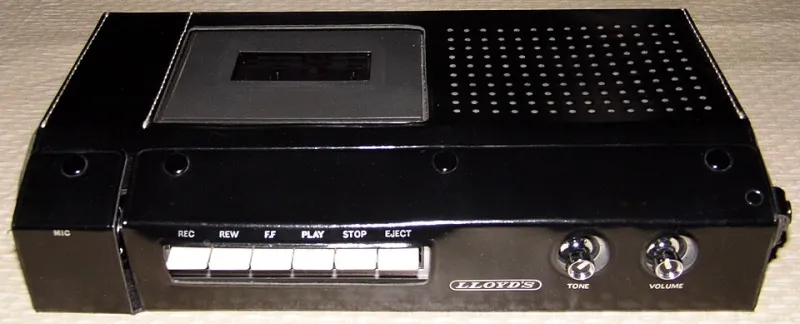
Photo: Joe Haupt from USA, CC BY-SA 2.0, via Wikimedia Commons
There's a moment every bedroom producer knows. You've been tweaking a mix for three hours, hunting down that faint low-end hum bleeding in from your laptop fan, nuking every bit of tape hiss from the sample you just flipped, running your vocal take through a noise gate so tight it barely breathes. You hit play. The track sounds immaculate. Sterile. Like it was assembled in a lab.
And somehow, it feels like nothing.
That gap between technical cleanliness and emotional resonance is exactly what a growing number of producers are starting to talk about — loudly. Because somewhere between the endless plugin updates and the obsessive pursuit of a mix that could survive a forensic audit, something got lost. The dirt. The grain. The feeling that an actual human being made this thing in a real room with real limitations.
The good news? A whole generation of indie and electronic producers is actively taking that stuff back.
The Clean Music Problem Nobody Wants to Admit
Modern production tools are genuinely incredible. You can record a full album in a $400 home setup that would've cost tens of thousands in a professional studio twenty years ago. Noise reduction algorithms are so advanced they can strip ambient room tone from a recording with surgical precision. Pitch correction, quantization, spectral repair — the toolkit for 'fixing' audio has never been more powerful.
But here's the thing about fixing everything: you can sand a piece of wood so smooth it loses all its grain. At some point, you're not enhancing something — you're erasing it.
Listeners feel that erasure, even if they can't name it. There's a reason lo-fi hip-hop exploded the way it did, a reason artists like Grouper or Lil Ugly Mane built cult followings on recordings that sound like they were captured through a wet paper bag. The imperfection isn't incidental to the appeal. It is the appeal. It signals authenticity in a music landscape so polished it's started to feel like a showroom.
Hiss as a Harmonic Element
Let's get specific about what 'imperfection' actually means in practice, because it's not just about being sloppy.
Tape hiss, when used intentionally, adds a high-frequency shimmer that can actually glue elements of a mix together. Producers who run their stems through old cassette decks or analog tape emulators aren't just chasing nostalgia — they're adding a consistent harmonic layer that digital audio, by its nature, doesn't generate. That hiss becomes part of the texture, the same way reverb or saturation is part of the texture.
The same logic applies to vinyl crackle, transformer hum, even the low-level noise floor of a cheap microphone. When every element of a track shares that same ambient noise signature, the mix coheres in a way that can be surprisingly hard to achieve with pristine recordings stitched together from a dozen different sources.
Some producers are going further — deliberately clipping signals, letting transients distort, leaving in room noise or the sound of equipment being handled. These aren't accidents. They're decisions.
Limitations as Creative Identity
One of the most interesting things happening in indie electronic music right now is producers turning their actual constraints into sonic signatures.
Maybe you only have a mid-range audio interface with a noisy preamp. You could spend the next year saving up for an upgrade, or you could learn the specific character of that noise and build tracks around it. The hum becomes yours. The ceiling on your dynamic range becomes your compression aesthetic. The frequency response quirks of your monitors become the reason your mixes translate a certain way.
This is how a lot of classic records got made, by the way. The limitations of the gear available at Sun Studio, at Chess Records, at the home setups where early hip-hop producers were working — those limitations didn't hold the music back. They defined it. The lo-fi aesthetic of early Wu-Tang wasn't a compromise. It was a statement.
The difference now is that producers are choosing this path when they could theoretically choose otherwise. That choice is meaningful. It says something about what you value.
What Listeners Are Actually Responding To
There's a tactile quality to imperfect recordings that clean audio simply can't replicate. When you hear a track with audible room noise, your brain registers that the music exists in physical space — that it happened somewhere, that it was made by bodies in a room with walls and air. Hyper-clean digital production can sometimes feel like it exists nowhere at all, floating in a frictionless void.
Audiences raised on streaming are increasingly drawn to anything that feels handmade. Vinyl sales have been climbing steadily for years. Cassette culture never fully died. The market for lo-fi beats, raw indie rock, gritty electronic music with analog warmth — all of it points to a hunger for texture that the pursuit of perfection has been slowly starving.
There's also something to be said for the emotional register of imperfect recordings. A voice captured with a little too much room, a piano with audible pedal noise, a drum machine left slightly out of sync — these things communicate vulnerability and presence in ways that a perfectly processed performance often doesn't.
Practical Ways to Lean Into the Noise
If you're curious about experimenting with intentional imperfection, here are a few starting points that don't require you to blow your setup up:
Run your mix bus through a tape emulator and leave the saturation higher than feels comfortable. Plugins like IK Multimedia's TASCAM Tape Collection or Arturia's Tape MELLO-FI can add real character without destroying your dynamics.
Record room tone and layer it under your mix at a very low level. This can unify elements that were recorded or sampled from different sources, giving the whole track a shared acoustic space.
Leave in artifacts. That click at the beginning of a take, the breath before a vocal line, the slight mechanical noise from your hardware synth — decide consciously whether it serves the track before you cut it out. Sometimes it does.
Experiment with bit crushing and sample rate reduction on elements where you want grit. Used subtly, it can add a kind of digital roughness that reads as 'real' in a weird way.
Let your reverb tails decay into the noise floor. Instead of cutting reverb short and clean, let things blur and fade into ambient hiss. It creates a sense of depth and space.
The Bigger Point
Chasing perfection in your production isn't inherently wrong. But it's worth asking what you're actually after — and whether the thing you're trying to remove is actually a problem, or whether it's the thing that makes your sound yours.
The producers getting attention right now, the ones building real followings without major label budgets, are often the ones who've stopped apologizing for their limitations and started owning them. The noise floor isn't the enemy. Sometimes it's the whole vibe.
Make some dirty music. See what happens.